
Author name: John McBride

GenTree Journal

The Hidden Colossus: Why America’s Largest Ancestry Group Is the One You Forgot About

Think of American heritage, and you likely think of the English. That’s the conventional narrative, but the census data tells a different, far more surprising story. German-Americans constitute the single largest ethnic ancestry group in the United States. This is the great “Heritage Plot Twist” : German culture was so successful at becoming American that its origins were entirely forgotten. This blog post will reveal why German influence is the “Hidden Colossus” and how intense assimilation pressures erased this massive heritage, allowing foundational German contributions to be absorbed without attribution. The Surprising Demographic Reality Check Analysis of recent census data reveals that approximately 43 million to 45 million Americans claim German roots. This monumental figure solidifies German ancestry as the largest identifiable single group , estimated to represent about 17% of the total U.S. population. In fact, German ancestry is the most-reported group in the entire Midwest and the top reported ancestry in 23 U.S. states. The sheer scale of this population is often overlooked. Why? Coerced Assimilation: The geopolitical conflicts of the two World Wars generated intense anti-German sentiment (Germanophobia). This environment compelled rapid assimilation, resulting in widespread name anglicization (like Schmidt to Smith or Müller to Miller) and the abandonment of the German language. Institutional Attack: During WWI, institutional collapse occurred as states banned German instruction in schools. The infamous Iowa’s 1918 Babel Proclamation prohibited the use of all foreign languages in public places. This targeting dismantled the language’s external support structures, forcing German heritage into the private sphere where it became fragile and difficult to maintain across generations. The Invisible Foundations of Modern American Life The profound influence of German immigrants extends far beyond stereotypes, having laid the structural frameworks for some of our most essential systems. The Education Revolution German-Americans introduced concepts that modernized both early and advanced stages of American schooling: Kindergarten: The term itself is German for “children’s garden”. German-Americans established the first kindergartens in the U.S., popularizing this systematic approach to early childhood development. The Ph.D. and Research University: The American graduate education system owes a debt to the 19th-century Prussian university reforms (the Humboldtian model), which championed the unity of teaching and research and led to the formal Ph.D. degree. Food, Drink, and Leisure German immigration revolutionized American leisure, cuisine, and holiday traditions, which were so thoroughly absorbed they are now viewed as quintessentially American: American Staples: Foods considered quintessentially American are traced directly back to German traditions: hamburgers and hot dogs. They were instrumental in scaling industries like sausage making and brewing. The Lager Beer Revolution: German-American immigrants introduced lager beer (requiring skilled brewers and advanced chilling technology), causing a massive shift away from traditional ales to the lighter lagers that dominate the modern market. Democratizing Leisure: Germans fundamentally challenged the Puritanical Sabbath. They introduced the Christmas tree tradition , established the concept of the Sunday Outing (for secular, communal relaxation) , and founded Turnvereine (gymnastics and sports clubs), which brought organized athletics to communities. The success of these cultural shifts meant they rapidly transitioned from niche ethnic elements to mass-market staples, obscuring their German origins. Unlock Your German-American Story The German Belt—stretching from Pennsylvania through the Midwest and deep into Texas—is a testament to massive, continuous German immigration that built the agricultural and industrial centers of America. The fact that the largest ethnic group in the U.S. had to effectively “go silent” during the 20th century means that a significant portion of the country’s heritage is hidden in plain sight. Are you one of the 45 million Americans whose heritage has been obscured by this incredible historical pressure? GenTree Global can help you uncover the German names, migration waves, and regional settlements—like Germantown in 1683 or the skilled “Forty-Eighters” —that led to your family’s place in America’s Hidden Colossus.

Recipe

Poppy Seed Cake

Print Poppy Seed Cake Recipe by Beth StollerCourse: DessertCuisine: AmericanServings 8 servingsPrep time 20 minutesResting Time 10 minutesBaking Time 1 hour A light, fluffy cake featuring poppy seeds (or chocolate chips) with a tender crumb from sour cream or yogurt and folded-in egg whites for extra lift. Ingredients 4 eggs, separated 1/2 lb butter or margarine 1 1/2 cups sugar 1/2 pint sour cream or yogurt 2 cups sifted flour 1 teaspoon baking soda 3 teaspoons vanilla 1/4 cup poppy seeds or chocolate chips Directions Beat 4 egg whites until stiff and set aside Cream together butter and sugar, then add egg yolks and beat well Add sour cream or yogurt, baking soda, sifted flour, vanilla, and poppy seeds (or chocolate chips); beat well Gently fold in the beaten egg whites Pour into an ungreased tube pan Bake until done (temperature and time not specified in original recipe – typically 350°F for 50-60 minutes) I use margarine and Dannon vanilla yogurt. Feel free to substitute chocolate bites for poppy seeds.

Recipe

Pink Stuff

Print Pink Stuff Recipe by Beth StollerCourse: DessertCuisine: AmericanServings 6 servingsPrep time 10 minutesResting Time 2 hours A sweet, creamy fruit salad combining cottage cheese, mixed canned fruits, Cool Whip, and berry Jello powder with mini marshmallows for a light, refreshing dessert. Ingredients 1 lb cottage cheese 1 lb can peaches 1 can pineapple chunks 1 can mandarin oranges 1 container Cool Whip 1 package (3 oz) berry-flavored Jello 1/2 package mini marshmallows Directions Mix all ingredients together Pour into a Jello mold Refrigerate until set

Recipe

Zucchini Casseroles

Print Zucchini Casseroles Recipe by The Ruospo'sCourse: AppetizerCuisine: AmericanServings 4 servingsPrep time 15 minutesBaking Time 70 minutes A savory, egg-based casserole combining tender zucchini and onion with melted cheese and Bisquick for a golden, satisfying dish. Ingredients 3 lbs zucchini, chopped fine 6 eggs 1 cup oil 1 tsp salt 1 cup grated cheese 2 cups Bisquick 1 onion, chopped Directions Preheat oven to 350°F. Grease a 13×9-inch baking pan. In a large bowl, beat the eggs. Add oil, salt, grated cheese, and Bisquick to the eggs. Mix until well combined. Fold in the finely chopped zucchini and chopped onion. Pour mixture into the prepared greased pan. Bake uncovered for 1 hour and 10 minutes, or until lightly browned on top.

Recipe

Applesauce Nut Bread

Print Applesauce Nut Bread Recipe by The Ruospo'sCourse: Breakfast/DessertCuisine: AmericanServings 4 servingsPrep time 30 minutesResting Time 10 minutesBaking Time 45-60 minutes A moist, lightly spiced quick bread combining the sweetness of applesauce with crunchy nuts and chocolate chips. Ingredients 1 cup sugar 2 cups flour 2 tsp baking powder 1/2 tsp baking soda 1/2 tsp salt 1/2 tsp cinnamon 1 1/2 cups applesauce 2 eggs 2 tbsp melted butter 1/2 cup chopped nuts 1 cup chocolate chips Directions Preheat oven to 350°F. Grease a 13×8-inch pan. In a large bowl, mix together sugar and eggs until well combined. Add apple sauce and melted butter to the egg mixture; stir to combine. In a separate bowl, whisk together flour, baking powder, baking soda, salt, and cinnamon. Add the dry ingredients to the wet mixture and stir until just combined. Pour batter into the prepared pan and spread evenly. Sprinkle nuts and chocolate chips over the top. Bake for 45-60 minutes, or until a toothpick inserted in the center comes out clean. Cool in the pan before slicing and serving.

Recipe

Chicken and Dumplings Recipe

Print Chicken and Dumplings Recipe Recipe by Margaret HughesCourse: Main courseCuisine: United StateServings 6 peoplePrep time 20 minutesCooking time 1 hourResting Time 10 minutes Chicken & Dumplings is a warm, hearty dish that combines tender chicken, flavorful broth, and pillowy dumplings. A Southern staple, it’s a comfort food that has soothed generations on cold days and family gatherings. Ingredients 3 lb whole chicken, cut into pieces 8 cups chicken stock (preferably homemade) 2 carrots — peeled and diced 2 celery stalks — diced 1 medium yellow onion — chopped 2 cloves garlic — minced 2 bay leaves 1 tsp dried thyme (or 1 tbsp fresh) 1 tsp kosher salt (to taste) ½ tsp black pepper 2 tbsp unsalted butter 2 tbsp all-purpose flour (for thickening) ½ cup heavy cream For Dumplings: 2 cups all-purpose flour 1 tbsp baking powder 1 tsp kosher salt 4 tbsp unsalted butter — cold, cubed 1 cup whole milk Directions Make broth & cook chicken. In a large Dutch oven, add chicken pieces, chicken stock, carrots, celery, onion, garlic, bay leaves, thyme, salt, and pepper. Bring to a boil, then reduce to a gentle simmer for 45 minutes until chicken is fully cooked and tender. Shred chicken. Remove chicken from pot. Let rest 5 minutes, then shred meat, discarding skin and bones. Return shredded chicken to pot. Thicken base. In a small pan, melt butter and whisk in flour. Cook for 1–2 minutes until golden, then stir mixture into soup. Add cream. Simmer 5–10 minutes until slightly thickened. Prepare dumplings. In a mixing bowl, whisk flour, baking powder, and salt. Cut in cold butter until mixture resembles coarse crumbs. Stir in milk until dough forms. Cook dumplings. Drop spoonfuls of dough directly into simmering soup. Cover pot tightly and cook for 15–20 minutes without lifting lid, until dumplings are puffed and cooked through. Finish & serve. Remove bay leaves. Taste broth and adjust seasoning with salt and pepper. Serve hot with fresh parsley if desired. Notes Storage: Refrigerate in an airtight container up to 3 days. Reheat gently; add splash of stock if thickened.

Recipe

Brunswick Stew Recipe

Print Brunswick Stew Recipe Recipe by Evelyn CarterCourse: Main courseCuisine: United StateServings 6 peoplePrep time 30 minutesCooking time 40 minutesResting Time Ingredients 2 lb boneless, skinless chicken thighs (or 3–4 bone-in thighs) — trimmed 8 oz smoked ham or diced smoked pork (or 1½ cups diced ham) 2 tbsp vegetable oil (or other neutral oil) 1 large yellow onion — diced (about 1½ cups) 2 cloves garlic — minced 2 cups peeled, diced potatoes (about 2 medium) 2 cups corn kernels (fresh or frozen) 1½ cups lima beans (frozen or canned and drained) 1 (14.5 oz) can diced tomatoes (with juices) 1 (15 oz) can tomato sauce (or crushed tomatoes) 4 cups low-sodium chicken stock (or more as needed) 2 tbsp Worcestershire sauce 1 tbsp apple cider vinegar 2 tbsp brown sugar (packed) 1 tsp smoked paprika ½ tsp cayenne pepper (optional — to taste) 2 bay leaves 1 tsp dried thyme (or 1 tbsp fresh) 1–1½ tsp kosher salt (adjust to taste) ½ tsp black pepper (or to taste) 2 tbsp butter (optional, for finish) Fresh chopped parsley for garnish (optional) Directions Prepare meat & veg. Pat chicken dry and season lightly with salt and pepper. Dice smoked ham. Peel and dice potatoes; chop onion and mince garlic. Brown the meat. Heat oil in a large Dutch oven over medium-high heat. Add chicken thighs and brown 3–4 minutes per side (they don’t need to cook through). Transfer to a plate. Add diced ham and cook 2 minutes until edges color. Remove a portion of ham to use as garnish if desired. Sauté aromatics. Reduce heat to medium. Add onion to the pot and cook 4–5 minutes until soft and translucent. Add garlic and cook 30 seconds until fragrant. Build the stew. Return chicken and any juices to the pot. Add potatoes, diced tomatoes (with juices), tomato sauce, chicken stock, Worcestershire sauce, apple cider vinegar, brown sugar, smoked paprika, cayenne (if using), bay leaves, and thyme. Stir to combine. Simmer low and slow. Bring to a gentle boil, then reduce heat to low. Cover partially and simmer for 1 hour 15 minutes, stirring occasionally, until potatoes are tender and flavors meld. Shred chicken & adjust texture. Remove chicken pieces to a cutting board. Shred meat, discarding bones (if any), then return shredded chicken to the pot. If you prefer a thicker stew, scoop 2 cups of solids and mash them in a bowl or use an immersion blender to pulse a cup of the stew — then stir back in. Add beans & corn. Stir in lima beans and corn. Simmer uncovered for another 30–40 minutes until stew has thickened and everything is heated through. Taste and adjust seasoning (salt, pepper, sugar, or vinegar) as needed. Finish & serve. Remove bay leaves. Stir in butter for gloss and richness (optional). Ladle into bowls and garnish with reserved ham and chopped parsley. Storage: Refrigerate leftovers in a sealed container up to 3–4 days. Freeze up to 3 months. Reheat gently on the stove, adding a splash of stock or water if too thick.

GenTree Journal

The Like Button Revolution: How a Simple Thumbs Up Changed Consumer Behavior Forever

Understanding the psychology behind digital engagement can transform your business strategy Long before ChatGPT and self-driving cars captured the world’s imagination, a humble thumbs-up button quietly revolutionized how humans interact, make purchasing decisions, and consume information online. Today, we click “like” buttons more times per day than there are people on Earth but the story behind this digital phenomenon offers crucial insights for any business trying to understand modern consumer behavior. At GenTree Global, we believe successful commerce requires understanding the psychology of customer engagement. That’s why we’re exploring the fascinating history and neurological impact of the like button — and what it reveals about building genuine connections with conscious consumers. The Accidental Revolution The like button’s origin story reads like a perfect example of unintended consequences. Around 1995, various Silicon Valley developers were simultaneously grappling with similar challenges: how to rank content, encourage user engagement, and facilitate online reviews without requiring lengthy written responses. The breakthrough wasn’t planned. According to Martin Reeves and Bob Goodson, authors of “Like: The Button That Changed the World,” pioneers like James Hong (cofounder of Hot or Not) and Biz Stone (co-founder of Twitter) viewed the thumbs-up button as nothing more than a quick fix to routine design problems they faced daily. The Philosophy That Changed Everything These early developers were influenced by Steve Krug’s influential book “Don’t Make Me Think,” which advocated for interfaces so intuitive that users could act on pure instinct. The like button embodied this philosophy perfectly — it required no instructions, no learning curve, and tapped into a universally understood gesture of approval. The irony? By following the principle of “don’t make me think,” designers created something so frictionless that it could override our natural thinking processes entirely. The Neuroscience of Digital Validation What makes the like button so psychologically powerful? The answer lies in our brain’s reward system. Your Brain on Likes When you click a like button or receive likes on your content your brain releases dopamine directly into the nucleus accumbens, your internal pleasure center„ This isn lt metaphorical; it’s the same neurochemical reward system activated by eating chocolate, social interaction, or even addictive substances. The like button literally stimulates ancient evolutionary circuits tied to survival instincts and social bonding that kept our ancestors alive in tribal societies. The Social Suite Yale sociologist and physician Nicholas Christakis identified that like buttons exploit what he calls our “social suite” — evolutionary behaviors related to human social learning. Two key elements drive our engagement: Homophily: Our preference for associating with people similar to ourselves. When you like someone’s content, you signal both that you appreciate their post AND that you’re like them — a double validation that strengthens social bonds. Social Hierarchy: Unlike aggressive dominance hierarchies seen in other species, humans gravitate toward individuals with social influence and popularity. Like counts serve as visible cues of social endorsement, influencing our perceptions of value and trustworthiness. The Scale Problem: When Good Intentions Go Wrong Here’s where the story takes a darker turn. The like button’s creators accidentally built the most effective engagement machine in human history — but they had no idea what they were unleashing. Real World vs. Digital Validation Traditional social validation has natural limits: Physical constraints: You can only interact with people in your immediate vicinity Time boundaries: Face-to-face interactions require significant time investment Social circles: Your approval-seeking is limited to maybe a few hundred people maximum Digital Validation Has No Limits Online likes can be: Infinite in quantity: Millions of people can validate your content Instantaneous: Feedback arrives within seconds of posting Constantly available: 24/7 opportunities for validation seeking This fundamental difference overwhelms our dopamine circuits, especially in developing brains. The influx of digital validation can create dependency patterns similar to other addictive behaviors. The Commerce Connection: Likes as Consumer Signals Understanding like button psychology reveals crucial insights about modern consumer behavior and e-commerce strategy. Every Click Is Data When customers engage with your content through likes, they’re providing valuable behavioral data: Product preferences: What features or benefits resonate most Brand alignment: Which values and messages connect emotionally , Social proof: Which products gain organic advocacy Content effectiveness: What communication styles drive engagement The Algorithm Economy Like buttons don’t just make users feel good — they train artificial intelligence systems to understand individual preferences and behaviors. Every like becomes a vote in an algorithm that determines: What content users see next Which products get recommended How brands can target specific audiences What trends gain momentum in the marketplace For businesses: Understanding this system means recognizing that customer engagement through likes, shares, and comments directly influences your content’s reach and impact. Lessons for Conscious Commerce The like button’s success offers several key insights for businesses committed to building authentic relationships with customers: 1. Simplicity Drives Engagement The like button succeeded because it eliminated friction. Application for business: Make it as easy as possible for customers to engage with your brand. Reduce barriers to: , Product discovery Purchase processes Customer feedback Social sharing 2. Psychology Matters More Than Technology The most successful digital innovations tap into fundamental human needs and behaviors. Application for business:Design customer experiences that align with natural psychological patterns: Social validation (reviews, testimonials, user-generated content) Tribal belonging (community building, brand values alignment) , Status recognition (loyalty programs, exclusive access) 3. Unintended Consequences Require Monitoring The like button’s creators never anticipated addiction, anxiety, or manipulation issues. Application for business: Regularly assess whether your engagement strategies promote healthy customer relationships or potentially harmful dependencies. 4. Authentic Connection Beats Manipulation While the like button can be used manipulatively, its most sustainable applications build genuine community and value. Application for business: Focus on creating content and products that earn authentic enthusiasm rather than exploiting psychological vulnerabilities. Building Better Digital Relationships At GenTree Global, we believe the like button’s history offers a roadmap for more conscious customer engagement: Quality Over Quantity Rather than optimizing for maximum likes regardless of source or authenticity, focus on meaningful engagement from customers

GenTree Journal

The Power of Storytelling: From Boxed Memories to Digital Legacies – Discovering Solutions with GenTree Global

We all have those cherished family stories – the hilarious mishaps, the moments of profound joy, the tales of resilience passed down through generations. I vividly recall the time an uncle ran a rented boat int the dock on Lake Winnipesauke in New Hampshire with myself and 14 cousins looking forward to taking turns on a boat ride that was not to be. For many years my Fathers family (the Irish side of the Family) would rent out at least 5 cottages, but sometimes more that formed a circle overlooking the Lake. Long stretches of Pinnacle card games, playing Capture the Flag with all of our cousins, singing Hokey Pokey, and the final night splurge of a Lobster Dinner for all of us.  How often do these precious narratives get lost to time, with faded photographs, and crackling audio recordings? At GenTree Global, we believe these stories are the very fabric of our identity, and our mission is to empower you by pointing you to the best tools and services available, most using AI, to preserve and share them, join us.” Think about it: every family has a treasure trove of stories waiting to be unearthed. From dusty photo albums and handwritten letters to old audio recordings, these artifacts hold the keys to understanding our past. GenTree Global is here to highlight effective, proven solutions that can help unlock those keys, making the process not just easy, but genuinely exciting. Your Path to Legacy Preservation: GenTree Global as Your Resource GenTree Global serves as a valuable resource for those seeking to manage and present their family’s stories. Our primary role is to inform you about reputable services and useful tools for the initial phases of digitizing and enhancing your precious family artifacts. Effortless Digitization: Bringing Analog to Digital The Challenge: Converting physical photos, documents, and analog audio/video into digital files can seem daunting. Information from GenTree Global: Learn about various options for digitizing your physical archives, from DIY approaches to professional services: Do-It-Yourself (DIY): For those who prefer to handle it themselves, a smartphone or digital camera (free if you own one) can be used for capturing high-quality images of photos and documents. For even better resolution and archival quality, a flatbed scanner (available from brands like Epson or Canon, various price points) is often recommended. Find external resources outlining best practices for DIY scanning. Professional Digitization Services (Paid): For larger collections of photos, film negatives, slides, or old video/audio tapes, professional services can save significant time. Companies like Legacybox (various packages, typically starts around $60-$70 for a few items) and ScanMyPhotos.com (pricing based on quantity, starting around $19.95 for 500 photos) specialize in converting physical media to digital. Memory Fortress also offers bulk scanning services. Information on the services offered by these companies and considerations for choosing the best fit for your needs is available. Intelligent Organization: Making Sense of the Memories The Challenge: Once digitized, the sheer volume of digital files can still be overwhelming. How do you find what you’re looking for? Information from GenTree Global: Explore strategies and tools that can help bring order to your digital collection. Automated Tagging & Categorization: Many digital photo management platforms can assist with initial organization. Services like Google Photos (free for initial storage, paid for more: e.g., 100GB for $1.99/month) or features within a MyHeritage paid subscription (often included in larger plans, starting around $199/year for their Complete Plan) can use image recognition to help identify people (with your permission) or locations. Learn how to discover and leverage these existing tagging features and how to manually refine them for your family history. Smart Grouping: Discover methodologies for organizing your memories logically within your own digital storage, whether by family branch, event, or generation. Duplicate Detection: Many photo management software programs (some free, like Duplicate Photos Fixer Pro with free trials/basic versions, others paid) offer tools to identify and manage duplicate files, keeping your collection streamlined. Advanced Transcription Services: Giving Voice to the Past The Challenge: Memories locked in audio recordings or old handwritten documents are inaccessible to modern search or easy sharing. Information from GenTree Global: Find services that can unlock these valuable insights. Audio to Text Transcription (Paid/Free Trials): For digitized oral histories, recorded interviews, or old voicemails, professional transcription services can convert spoken words into searchable, editable text. Companies like Rev.com (paid, e.g., $1.50/minute for human transcription, or cheaper for AI) or TurboScribe (free for limited transcripts, paid plans start around $10/month for unlimited) offer efficient audio-to-text conversion. Handwriting Recognition (HWR) (Free/Paid): For handwritten letters, journals, or historical documents, specialized AI-powered tools are continually emerging. Transkribus (offers 50 free credits monthly, then paid plans) is a leading platform that can decipher various handwriting styles and convert them into digital text. FamilySearch (free with a free account) also utilizes advanced HWR in its efforts to digitize global historical records, and their tools are often publicly available for personal use through their community projects. Gain insights on selecting and utilizing these services. Enhancement & Restoration: Bringing Clarity to Faded Memories The Challenge: Old photos and documents can be faded, scratched, or blurry, obscuring precious details. Information from GenTree Global: Learn about tools that can enhance your digitized media, bringing clarity and vibrancy back to your visual history. Photo Enhancement & Colorization (Free & Paid): Tools that use AI to sharpen blurry images, enhance facial details, and even colorize black-and-white photos are widely available. Examples include MyHeritage Photo Enhancer (free for limited use, paid subscriptions for unlimited), Remini (free version with limited features, paid subscriptions starting around $17.99/month), and Photogrid (offers a free AI image enhancer with no watermark). Discover these tools and resources on how to best apply them to your photos. Document Readability: Basic photo editing software (often free, built into your computer’s OS) can help adjust contrast and brightness for scanned documents, improving readability. Dynamic Multimedia Timelines: Visualizing Your Legacy The Challenge: Once you have a collection of digitized and enhanced memories, how do you bring

GenTree Journal

The Future of Family: Exploring What’s Next in AI-Powered Connection

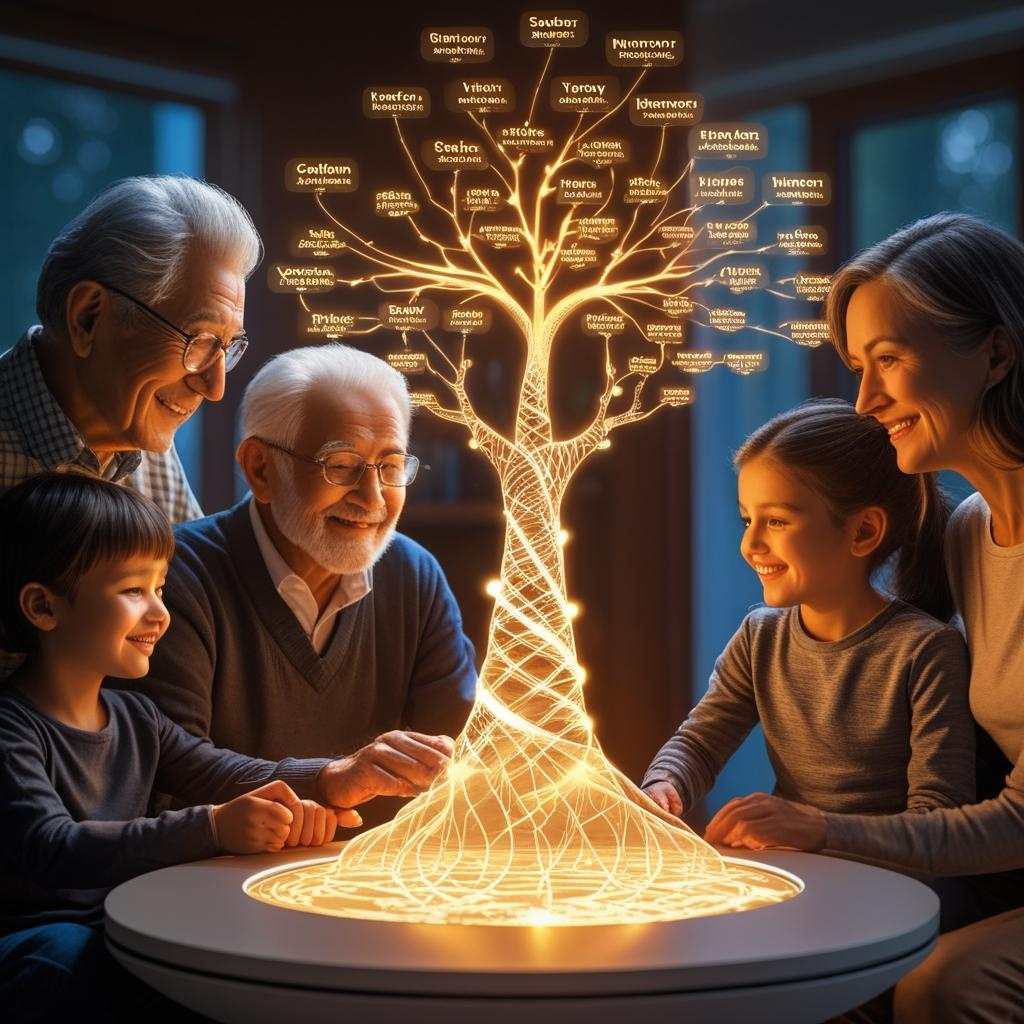
The founders of GenTree Global are filled with excitement about the ongoing journey of family connection and the incredible potential that Artificial Intelligence continues to unlock. We’ve explored how AI is revolutionizing storytelling, genealogy, accessibility, and intergenerational activities by transforming how we interact with our past. This is just the beginning. The potential for technology to deepen our understanding of our roots and strengthen our family bonds is vast, and GenTree Global is dedicated to being your go-to resource for understanding these evolving innovations. GenTree Global is committed to tracking and sharing insights into the cutting edge of AI-driven family connection. We’ll highlight developments from various sources and offer perspectives on what’s next in this dynamic field. Here’s a glimpse into the future of family connection and the areas where AI is expected to make significant advancements: Enhanced Discovery and Insights: The Trend: AI is continuously refining its ability to process vast amounts of data, from historical records to personal anecdotes. Future Potential: Expect AI-powered genealogy platforms to offer even more granular and accurate record suggestions, connect seemingly disparate family lines with higher confidence, and provide deeper historical context related to your ancestors’ lives. Companies like Ancestry.com and MyHeritage are continually investing in their AI capabilities to deliver more sophisticated “hints” and discovery pathways, moving towards even more predictive and insightful genealogical analysis. A more detailed report on Genealogy Platforms with AI Integration is attached below and includes Specialized AI Tools. Personalized and Immersive Experiences: The Trend: Technology is moving towards highly individualized and engaging user interactions. Future Potential: Imagine AI-generated virtual tours of ancestral homelands based on historical maps and photos, or interactive conversational AI “assistants” that can tell you stories about your ancestors in a captivating way, drawing from your uploaded family data. Companies like Storii (subscription-based, offers AI-powered life story generation) are already experimenting with AI to create personalized narratives and preserve audio memoirs, hinting at more immersive experiences to come. Seamless Intergenerational Collaboration: The Trend: Making it easier for family members of all ages and tech-savviness levels to contribute to and explore their shared history. Future Potential: Look for further advancements in intuitive interfaces and voice-controlled systems that simplify content creation and sharing. AI could facilitate collaborative storytelling projects by dynamically suggesting contributions or organizing diverse media from multiple family members. Platforms dedicated to family communication (e.g., FamilyApp or Kinsfolk, both free with potential in-app purchases) may integrate more AI features to enhance sharing and collaborative features. Ethical AI and Privacy in Family History: The Trend: As AI becomes more powerful, the importance of data privacy, security, and ethical considerations grows. Future Focus: Discussions around how AI is used to handle sensitive personal and family data will continue to be paramount. GenTree Global will provide resources on understanding best practices for data security and privacy in family history research, highlighting companies and platforms that prioritize user control and transparency. Understanding the ethical guidelines set by organizations like the IEEE Global Initiative on Ethics of Autonomous and Intelligent Systems can inform how family history data is handled responsibly. GenTree Global is your premier source for information on these cutting-edge developments. We believe that by staying informed about the incredible potential of AI, you can better navigate the future of family connection and ensure your unique story is preserved and celebrated for generations to come. Ready to be a part of the future of family connection? Call to Action: Stay informed about the latest innovations and contribute to the future of AI-powered family connection. Sign up for our email list today to receive exclusive updates on new technologies, research, and opportunities to share your feedback! www.gentreeglobal.com Repeat Call to Action (for email list): Want to be among the first to learn about cutting-edge features and help shape the future of family history? Join our email list now! www.gentreeglobal.com

Shopping Cart